State the basis
Duty cycle, current, voltage, travel speed, gas flow and inspection results need a test condition or document reference. A number without its basis is not a comparison.


Equipment knowledge, application context and qualification discipline meet in one decision trail—from the joint drawing through setup, coupon evidence and production handoff.
This timeline avoids unsupported corporate milestones. It describes the evidence path a buyer, welding engineer and production lead can examine together.
Product documentation, quotations and regional approvals remain the source for model-specific claims. When a value is absent from those assets, it is treated as unknown and resolved by review or test.
Material grade, thickness range, joint geometry, position, desired deposition and acceptance criteria establish the process envelope. The machine is not selected from amperage alone.
Power source, feeder, torch, leads, return path, consumable, shielding and incoming power are reviewed as one system. Automation adds fixtures, motion, communications and safeguarding.
The setup is recorded, the joint is reproduced and the result is evaluated against stated criteria. A visual preference is not treated as equivalent to code acceptance.
The handover identifies approved ranges, substitutions that require review, operator checks and maintenance triggers. That record supports repeatability when shifts, consumables or site conditions change.
Duty cycle, current, voltage, travel speed, gas flow and inspection results need a test condition or document reference. A number without its basis is not a comparison.
Long leads, unstable power, high ambient temperature, poor fit-up and contaminated material can shift outcomes. Useful guidance names those constraints before release.
Consumable, gas, waveform, torch, feeder and software changes can alter the operating window. The handoff record identifies which changes require renewed verification.
These are functional roles in a robust project, not named ESAB employees. The exact team depends on region and scope.
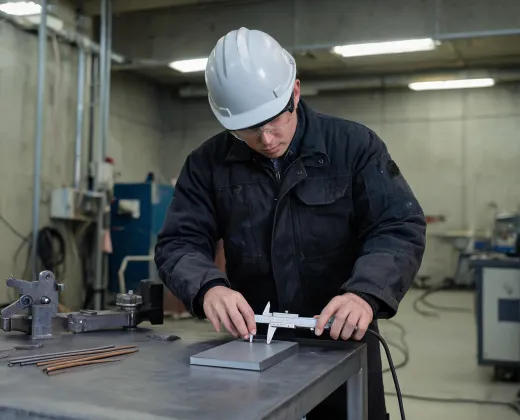
Frames the process question and test matrix.
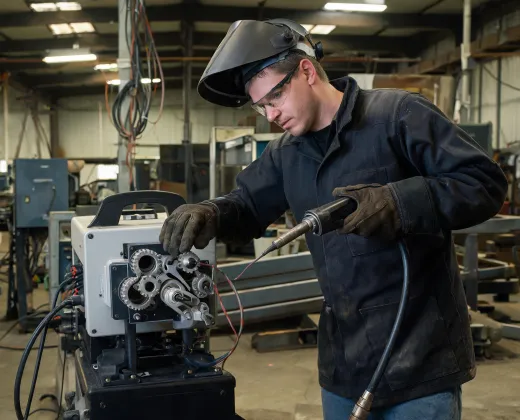
Checks feeding, access, changeover and maintainability.

Connects evidence to the acceptance route.

Coordinates motion, communication and cell boundaries.
Share material, thickness, position, process target and inspection criteria to begin a bounded configuration discussion.